*This site contains affiliate links, which means I receive a commission when you buy. See my full disclosure.
Nowadays, it is oddly more difficult to plan a Barcelona trip. There is too much information and even fake AI Barcelona photos floating around. No wonder it feels confusing. Let me simplify it for you. I’ve been living here since 2008, and this is the Barcelona itinerary I give my family and friends. This is what you should at least see if you’re a beginner in Barcelona.
Barcelona for new travelers
Let’s make this as simple as possible. In this post, you’ll learn:
- Where to stay for your first time in Barcelona
- Which tickets to book early
- Main areas to visit and simple mini-itineraries
- Extra ideas if you have more time (neighborhoods + day trips)
- A quick table to see what each area is best for and how long to spend there
Where to Stay in Barcelona for First-Timers
These are the areas to stay where it’s centrally located:
Gothic Quarter – It’s central and historical, and you’re literally staying in the middle of the action. It’s also the most touristic and loud, depending on the street. I recommend Barcelona Catedral Hotel, which is tucked away on a side street. TIP: Search for “noise” or “noisy” in guest comments to figure out which hotels do filter out noise.
Born – Creative boutiques, bars and restaurants. Fantastic area for getting lost and discovering unique shops. Where to stay: Ohla Hotel is fantastic.
Eixample – This covers a large area and feels more open than the old part of the city (Gothic Quarter and Born). You get elegant, wide streets and easy metro connections. It feels safe at night, and has a newer, cleaner feel. Good hotel: Hotel Majestic (high-end).
Alternative areas to stay:
Poblenou – A seaside area, it’s is fantastic if you want a more airy, beachy ambiance. Authentic neighborhood feel. Also further from the historic center (might take 15 minutes combination of walking and metro or bus).
Gracia – Tiny fashion boutiques, cool cafes, community-filled plazas, and a family atmosphere. Fantastic if you want to feel “local”. (Also about 10-15 minutes from the center, walking or metro.)
La Barceloneta near the beach and is fantastic for the summer. Note that it has a party atmosphere. I do not recommend this for a solo female traveler staying in an Airbnb, where you’re more vulnerable.
Book These Tickets in Advance
These tickets will sell out, particularly in summer:
- Sagrada Família – Tickets appear about 60 days ahead, and prime times sell out in high season (summer). Last July, my cousin tried to buy a week ahead, and tickets were sold out.
- Park Güell – Book a timed entry to the Monumental Zone. On busy days, same-day tickets go fast.
- Casa Batllo or La Pedrera – If you love architecture, add a Gaudí house (Casa Batlló or La Pedrera) and book that too. I recommend Casa Batlló for first-timers.
First-Timer’s Best Areas to Visit in Barcelona
These are the core areas I’d focus on for a “beginner” Barcelona trip.
You can cover each in half a day:
- Sagrada Família and Passeig de Gràcia
- Old City – Gothic Quarter and El Born
- Park Guell
- The beaches and shoreline
Would be good to see if you have extra time:
- Gracia neighborhood
- Montjuic
- Tibidabo
- Day Trips (Sitges or Montserrat)
1. Sagrada Família and Passeig de Gràcia
Must-see monuments: Sagrada Familia (interior and exterior). Casa Batlló (interior and exterior), and La Pedrera
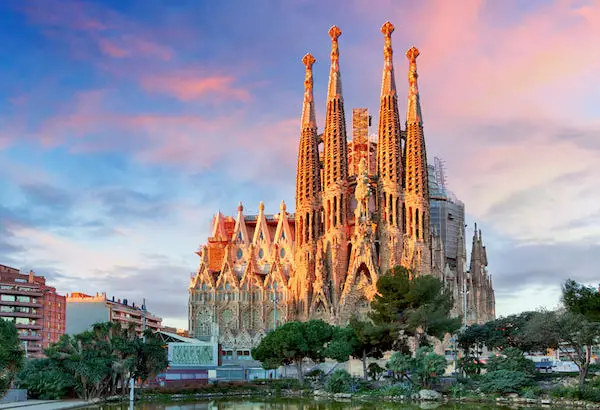
If there’s one building to enter in Barcelona, it’s this world-famous basilica. The unconventional design of the Sagrada Família Catholic church is unlike any other building on earth. Then roam the fancy shopping boulevard of Passeig de Gràcia with the famous Gaudí buildings, Casa Batlló and La Pedrera (Casa Milá).
The whole area feels polished and glamorous – down to the benches, also designed by Gaudí.
Mini-itinerary:
- Start at Sagrada Família metro (L2 purple or L5 blue). Visit the basilica first thing in the morning (1-2 hours).
- Then either walk down through Eixample toward Passeig de Gràcia (about 25–30 minutes on foot, not recommended in peak summer heat), or get on the metro to Passeig de Gràcia, or take a taxi.
- From there you can see Casa Batlló and La Pedrera (Casa Milà). I recommend Casa Batlló because this unique apartment complex is exquisitely detailed. Both houses are on Passeig de Gràcia, and you can at least see the exterior of La Pedrera even if you don’t go in.
2. Old City – Gothic Quarter and El Born
Gothic Quarter
Monuments to not miss: La Rambla and La Boqueria.
This is the ancient part of Barcelona – the gray stone narrow lanes of the city. Laundry often hangs above your head and a square opens up around a corner. Summer crowds can feel overwhelming.
Mini-itinerary:
- Start in Plaça Catalunya, which is a large, central, and emblematic square.
- Walk down the landmark street, La Rambla. It has some human statues, newspaper stands, and a good share of tourist trap restaurants.
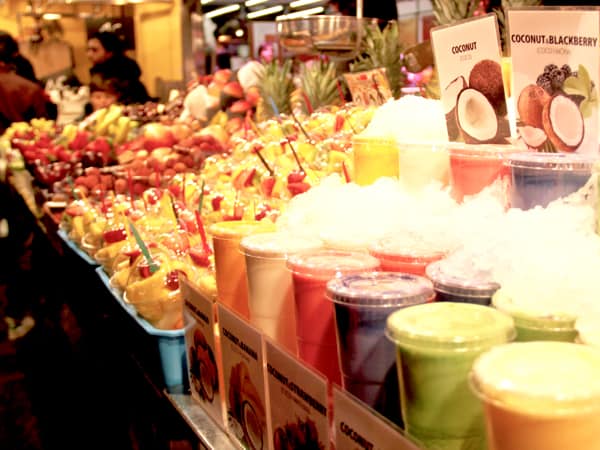
- About a third of the way down, to the right, you’ll see “Mercat de Sant Josep”, famously called La Boqueria food market. Walk inside and buy a food souvenir like quality tinned food (it’s a specialty in Spain) at Bar Clemens, high-quality nuts at Fruits Secs i espècies Morilla after you enter on the right.
- Get back on La Rambla facing the sea, then make a left in one of the side streets.
- Go down Carrer Petritxol, the chocolate street. Try thick hot chocolate with churros at Granja Dulcinea or Granja Pallaresa.
- Head to Plaça Reial and enjoy the central fountain that Gaudí designed.
- Once you’re in the Gothic streets, wander toward Barcelona Cathedral and Plaça del Rei.
El Born neighborhood
Monuments to not miss: Santa Caterina market and Santa Maria del Mar church.
A trendy neighborhood of medieval streets. Enjoy its evening bars and creative boutiques.
Mini-itinerary:
- Go into Santa Caterina Market (a food market with a colorful wavy roof) to look around and maybe have a coffee.
- Walk to the sober Santa Maria del Mar church and sit inside for a short visit.
- From the church, walk along Carrer de Montcada and pass by the Picasso Museum.
- Step out onto Passeig del Born, a short, tree lined promenade. It’s a good area to have an ice cream, a coffee, or a drink.
- If you like to find cool shops, the best thing to do is to get lost in this area, peek inside the workshops and tiny bars.
- Walk to El Born Cultural Center for a quick look at the old Roman ruins, then continue on if you like to Ciutadella Park to relax.
3. The Beaches and Shoreline
Must-see monuments: None, just a lovely walk
If you’re in Born or Gothic Quarter, you can easily reach the beach. This would be a good afternoon or evening activity if it’s still sunny outside.
It’s where you can see the sail-shaped W Hotel cut into the horizon and chiringuitos (beach bars) line the sand. You’ll also get the view of the Mediterranean Sea and a fun place to people watch.
Mini-itinerary:
- Take the metro to Barceloneta station, or walk down from the Old City towards Port Vell.
- Walk the Barceloneta beach promenade. It’s a bit wild in the summer. But you can walk past it.
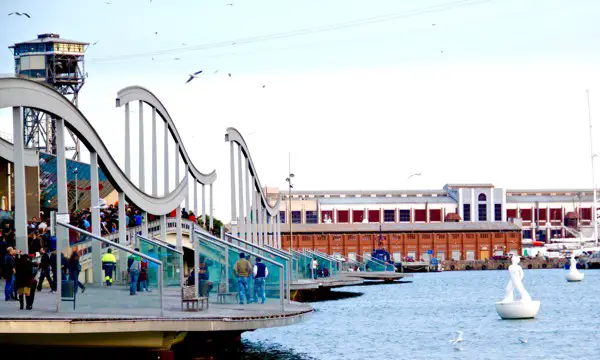
- You’ll hit Port Vell and the harbor.
4. Park Guell
Consider this a half-day activity since getting there and back can be up to 2 hours.
Park Guell is Gaudí’s creation, designed for industrialist and politician, Eusebio Guell. To be honest, my guests never feel completely mind-blown by Park Güell as a whole (I personally find the color and sculptures wonderful). But it’s just that emblematic. It’s also a fantastic spot to take photos and get that iconic shot with your own camera.
From the green line (L3), get off at Lesseps or Vallcarca. From either station it’s about a 20-minute uphill walk to the park entrances. It can be miserable on a hot day. Alternatively, bus 24 leaves from Plaça Catalunya.
Would be good to see if you have extra time
Gràcia neighborhood
Gràcia is the neighborhood where you can get a feeling for local life and imbibe in a creative atmosphere. It’s my favorite neighborhood to wander. It has small squares, independent shops, and a slower pace.
If you’re in Park Guell, you can walk down into Gràcia, which takes about 20 minutes if you’re in the mood (or just call a taxi or Cabify). Have a drink in a plaza like Plaça de la Vila or Plaça del Diamant. You’ll notice the strong community life, especially on a sunny afternoon. Kids on scooters, older neighbors chatting on benches, dogs trotting past, teenagers sit on the floor to chat.
Montjuïc
Montjuïc is the big green hill on the edge of Barcelona, full of parks, playgrounds and museums like the MNAC museum (come for the views), Poble Español, the Miró museum and the Olympic museum. There are viewpoints at almost every turn. Getting there is half the fun. Take the funicular from Paral·lel metro, then the cable car up toward the castle, or mix in buses and taxis if you don’t feel like climbing hills.
Tibidabo
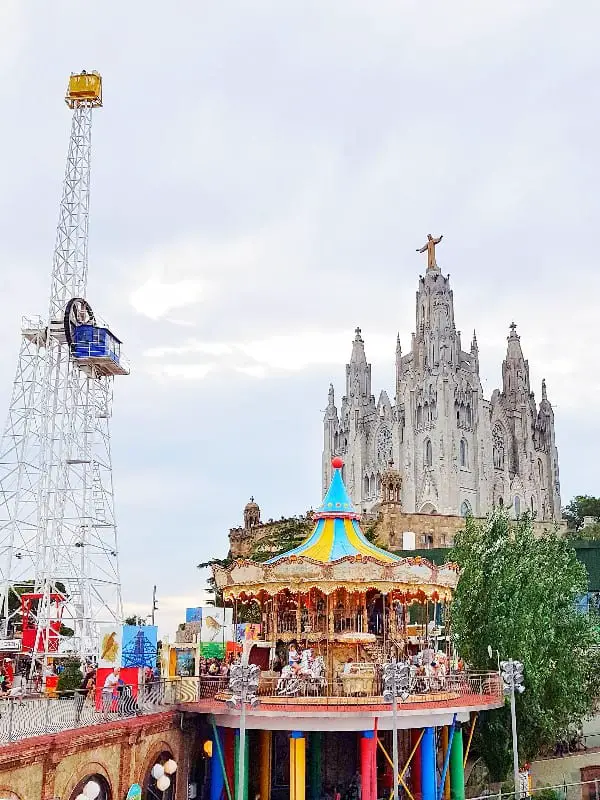
Tibidabo is your spot for the highest views in the city. At the top you will find the Sagrat Cor church and a vintage amusement park. By taxi it is about 35 minutes, and the payoff is enormous views in every direction.
Sitges Day Trip
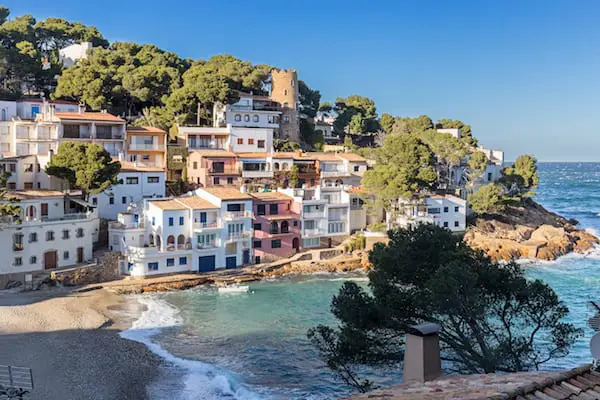
Sitges is a whitewashed seaside town and an escape from Barcelona’s concrete and crowds. Come for seafood paella at Mare Nostrum and stay for a slow, romantic stroll through its narrow white stone alleys and along the promenade.
Montserrat Day Trip
Montserrat is a jagged, saw tooth mountain with a monastery built into the rock. It’s a religious pilgrimage, a hiking day and an escape from Barcelona’s cement jungle. Come for the views and breathe out all your worries here.
Areas to Visit: Table overview
| Area / Place | Best for | Effort to navigate | Time to see (rough) |
|---|---|---|---|
| Sagrada Família and Passeig de Gràcia | Famous church, fancy boulevard, architecture and window-shopping | Moderate (crowds, but straightforward streets) | 3–5 hours (2 hrs Sagrada, 1–3 hrs Passeig) |
| Old City – Gothic Quarter & El Born | Wandering old streets, history, churches, cute cafés, small shops | Moderate (maze-like streets) | 3–6 hours (can easily fill half a day) |
| Park Güell | Gaudí park views, colorful mosaics, city panorama | Moderate to high (hills, stairs, timed entry) | 2–3 hours |
| Beaches and Shoreline (Barceloneta etc.) | Relaxing, walking, biking, sea views, casual food | Easy (flat, simple routes) | 1–4 hours (or as long as you like) |
If you have extra time
| Area / Place | Best for | Effort to navigate | Time to see (rough) |
|---|---|---|---|
| Gràcia neighborhood | Local atmosphere, small squares, cafés, less touristy streets | Easy to moderate (hilly but compact) | 2–3 hours (half day if you linger) |
| Montjuïc | Castle, museums, views, parks, Poble Espanyol | Moderate (hills, spread out) | 3–5 hours (can split over visits) |
| Tibidabo | Big hill views over the city, church, small amusement area | Higher effort (hill + transit up) | 3–5 hours including travel |
| Sitges (day trip) | Pretty seaside town, beach, strolling, food | Easy once on train (40 min ride) | Half to full day |
| Montserrat (day trip) | Heavenly mountain monastery, hiking, views | Moderate (cable car/funicular, some climbs) | Half to full day |
TLDR;
Stay central (Gothic Quarter, Born, or Eixample). Book Sagrada Família, Park Güell, and a Gaudí house (Casa Batlló or La Pedrera) in advance.
Focus your time on four core areas with their must-sees:
Monuments – Sagrada Família, Casa Batlló, La Boqueria, and Park Guell.
Wander – La Rambla, Passeig de Gràcia, Gothic Quarter, El Born, and the beaches.
If you have extra time, add Gràcia, Montjuïc, Tibidabo, or a day trip to Sitges or Montserrat.
Have any questions? Let me know what you think of this itinerary for first timers!