
*This site contains affiliate links, which means I receive a commission when you buy. See my full disclosure.
I’ve been a Barcelona resident for almost 17 years, and oftentimes, I still feel like a tourist. This happens usually when I’m wandering with the crowds in Gothic Quarter or Born, or passing through the raucous-y Plaça Catalunya. I still visit tourist sites from time to time (yes, even the Sagrada Familia!). For that reason, I’ve come up with some Barcelona tips and tricks for YOU, especially if you’re a first-timer. Find out what you need to do before you come to Barcelona!
Attractions
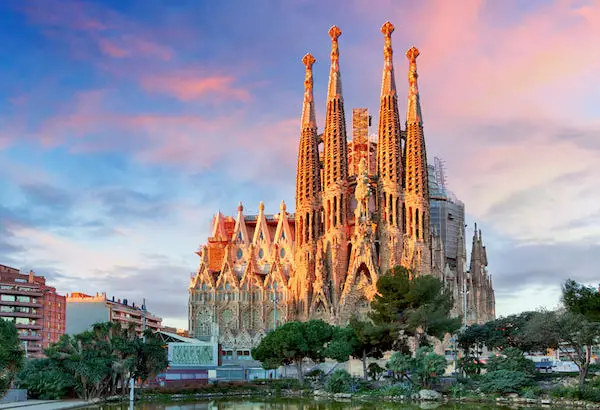
- Buy your tickets to the Barcelona top attractions ahead of time. Do this for two reasons 1) they’re often cheaper online, and 2) you can “skip the line”. Definitely do this for the Sagrada Familia, Park Guell, Picasso Museum, and maybe Casa Batlló in the summer. [Read my ultra-useful Sagrada Familia tips here.]
- Make sure the museum you want to visit is open. Some museums are closed on Mondays. Don’t be a dumb-dumb like me, and take a 2-hour train ride to the Dalí Museum and realize it’s closed.
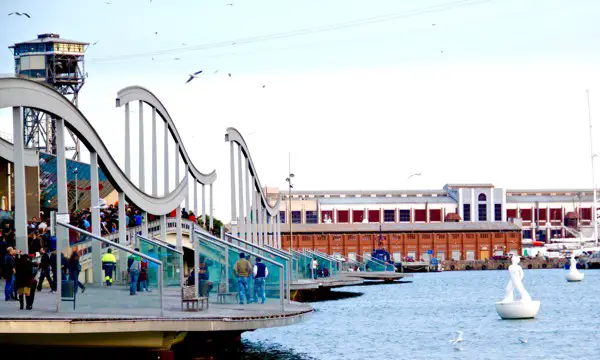
- What are the best places to go for a first-timer? In my opinion, if you have to pay to go INSIDE any Barcelona sights, it’s the Sagrada Familia and Park Guell. Other than that, you should experience walking around the Gothic Quarter and Born neighborhoods. <– These are the historical districts of Barcelona which are also packed with restaurants and bars. Then lastly, hit the port and beaches, and then get a view from Montjuic. That’s my order of preference.
- If you plan on staying for more than 3 days and want to visit 5 or more attractions, consider buying the Barcelona Pass. It will also save you time and will give you skip-the-line access to Sagrada Familia and Park Guell.
- People often expect to find a Dalí museum in Barcelona. It doesn’t exist. You’ll have to head north to Figueres to visit the Dalí Theater-Museum, which has to be my favorite museum in Spain. It takes about two hours to get there by train.
Want a completely free walking tour of Barcelona’s most important sights in historic center? It’s a 2-hour tour of the Gothic Quarter and Born. Book your free Barcelona walking tour now!
Food, Eating, and Restaurants
- Know the eating schedules. Locals typically have breakfast around 8 am (at home, if they work or go to school) and a mid-morning snack around 10:30 am. Lunch is around 2-2:30 pm. Dinner is around 10 pm. So if you want to beat any restaurant crowds, go earlier – 1 pm for lunch, maybe 8:30 pm for dinner. (That’s what I do because I HATE waiting at restaurants with my kids.)<<Read more in my post: how to eat like a local in Spain!>>
- If you’re going to have tapas with locals, expect to share from one plate. This tip is for people who are concerned about hygiene. Having tapas can be super fun because you share small appetizers – it’s a very social ritual! But sometimes, everyone just uses their fork to pierce the food from the shared plate straight into your chomper.
Language
- Catalan and Spanish are both official languages in Catalonia. Catalan is Catalonia’s llengua pròpia (“own language”). A lot of the official government-run signs are only in Catalan, so even though some words look somewhat familiar, it’s in Catalan! Having said that, you can often communicate in English, but I highly suggest you try to speak at least Spanish – it will always be appreciated.
- Catalan identity and independence can be a highly charged political issue, and people have very different opinions about it. In general, don’t assume that everyone in Barcelona feels the same way about being Catalan, Spanish, or both.
Drinking water
- In a restaurant, if you order water, they will automatically offer you bottled water. Yes, you can ask for a free glass of agua del grifo (“tap water”). In 2022, Spain passed a waste law, where hospitality and restaurant establishments must offer customers the possibility of free non-bottled water. But locals in Barcelona usually do not order tap water, but you have the right to. If you want water to fill your bottle, head to the public drinking fountains around Barcelona, there are plenty. You can even download this app to find the fountains.
- The water in Barcelona is perfectly safe to drink. The taste is something else. Some locals buy water, some drink from the tap. A trick to get rid of the undesirable taste is to refrigerate the water. It seems to do the trick for us. My family and I used to buy bottled water, but not only does it get expensive, it’s also a pain to buy liters of water a week. If you’re concerned about extra chemicals, you can also bring your own travel bottle with a filter like this one from Philips:
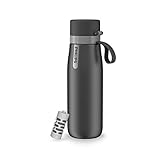
Buy this Philips travel bottle with a filter on Amazon

Getting around
- From the airport. There are a few easy options to get from BCN airport in El Prat. Taking a taxi is the easiest but most expensive option, about 40 euros to the city. Uber and Cabify both work in the city. Taking the train is easy too. Walk to the train station from Terminal 2. There are many attendants there to help you buy your ticket. There are several stops including on Passeig de Gràcia, which is pretty central. The train is clean and comfortable; you just have to beware of pickpockets. Or, take the Aerobus, a bus that takes you from the airport to 4 different stops in Barcelona. Buy your Aerobus ticket here with flexible cancellation
- The best way to get around is by walking or using the metro or bus. If you are going to the Gothic Quarter, Born, or La Barceloneta, you can walk. But to get to Sagrada Familia, Park Guell, Tibidabo, or Montjuic, you’ll probably want to use public transportation. For occasional trips, the T-Casual is one option. It gives you 10 journeys and currently costs €13 for one zone. You can’t share the same T-Casual with someone on the same trip. One important thing to know: the T-Casual cannot be used to enter or exit the airport metro stations on the L9 Sud.
Money and tipping
- Spain is part of the European Union, and the Euro is the currency. They do not accept dollars here anywhere. You can use credit cards. Sometimes a machine will ask for a PIN. So make sure you know what it is beforehand!
- Tipping at a restaurant is not expected in Barcelona. You do not have to tip for a 5-euro breakfast or for a drink at a bar. If you prefer, you can round up to the nearest euro. American compatriots, do not feel bad. Tipping culture in the US is getting ridiculous every time I go home. Here, you will not be pressured into tipping for paying at the counter. But, leave as much as you want. For big groups or a high-class restaurant, 10% would be a good tip.
- Tipping elsewhere. For taxis, hairdressers, hotel room service, you can round up your loose change or tip 1 to 2 euros. Of course, tip more if you feel the service was stellar. Again, it is NOT expected but definitely appreciated.
- One extra cost: Barcelona’s tourist tax. If you’re staying in a hotel or other tourist accommodation, remember that Barcelona charges a tourist tax. The amount depends on your type of accommodation and can add up, especially if you’re traveling as a family. Check your booking so you know whether it has already been included or will be charged separately.
Saving money
- Get in free at museums on the first Sunday of each month. For example, the Picasso Museum is free on the first Sunday of each month and on Thursday afternoons from 4 pm to 7 pm. But you MUST reserve your free Picasso Museum ticket online in advance. Free tickets are released four days before the visit at 10 am, and they can go fast! Here’s a list of free museums in Barcelona!
- Eat a menu del dia for lunch. This is a fixed-price meal offered during lunch at many restaurants. It usually includes a first dish, second dish and dessert or coffee, and sometimes a drink. Not all restaurants offer it, but when you find one, it can be a pretty good deal.
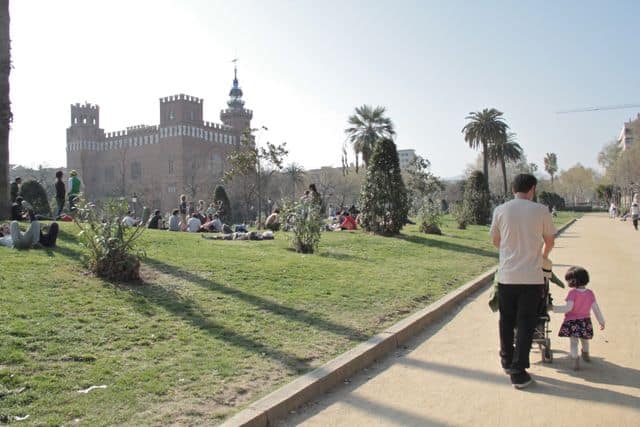
- Hang out in incredible Barcelona’s public spaces for free. You don’t have to enter all the museums to enjoy Barcelona. In fact, you don’t have to buy anything! The best places (especially for a sunny day) are Park Ciutadella, the beaches like Mar Bella, Barceloneta to people-watch, squares in the Grácia neighborhood (Plaça del Sol, Plaça Vila de Gràcia), or Tibidabo where you get the highest and best views of Barcelona!
Safety
Beware of pickpockets. It BREAKS MY HEART every time a tourist gets their wallet stolen. It also PISSES ME OFF! Consider buying an anti-theft purse if you are a woman. I own two by Travelon. Buy my favorite one here. (Read my buyer’s guide to choosing one). It has given me lots of peace of mind as I often have my hands full with my kids, my DSL camera, etc. You do NOT have to be paranoid about pickpockets. Relax, enjoy Barcelona, but be smart. Read more in my guide on how to avoid pickpockets in Barcelona.
Culture
- It’s polite to say “hola” when entering a shop and “adeu” when exiting. It’s not necessary, just polite.
- When meeting new friends or being introduced, locals sometimes give a kiss on each cheek. It is not rude if you don’t do it – a handshake is also acceptable. Also, it’s not a real kiss where the lips are planted tightly on the cheek. It’s more of a light “muah muah” with a light brush of the skin.
Wi-Fi and Internet Connection
- Know where the public wi-fi areas in Barcelona. They’ll save you from using all your data! You can find the stations here.
- For extra security, I suggest you use a VPN to keep your data secure and encrypted. It would be a complete disaster if your credit card information or other personal data got stolen.
That’s it! Did you learn anything new from my travel tips for Barcelona? Have any other questions? Let me know in the comments!
Interesting post!